Blog

Real‑Time Agent Assist: architectures, latency budgets, and vendors that actually cut handle time

Real‑Time Agent Assist: architectures, latency budgets, and vendors that actually cut handle time

Agent coaching only pays when latency is under 200ms, the assist UI stays out of the agent's way, and outcomes are measured in seconds saved per call; this post gives production architectures, SLO budgets, ROI metrics, and a vendor map that works in live contact centers.

Read More


Airewrite in Regulated Workloads: a Practical Security, Data‑Residency, and Audit Trail Playbook

Airewrite in Regulated Workloads: a Practical Security, Data‑Residency, and Audit Trail Playbook

Running Airewrite over PHI/PII or legal workflows with default settings will fail an auditor. This playbook gives engineers concrete patterns — data residency, on‑write redaction, encrypted vector stores, provenance bundles, and SIEM-linked canary evidence — plus implementation notes for Pinecone/Redis and Snowflake/BigQuery.

Read More

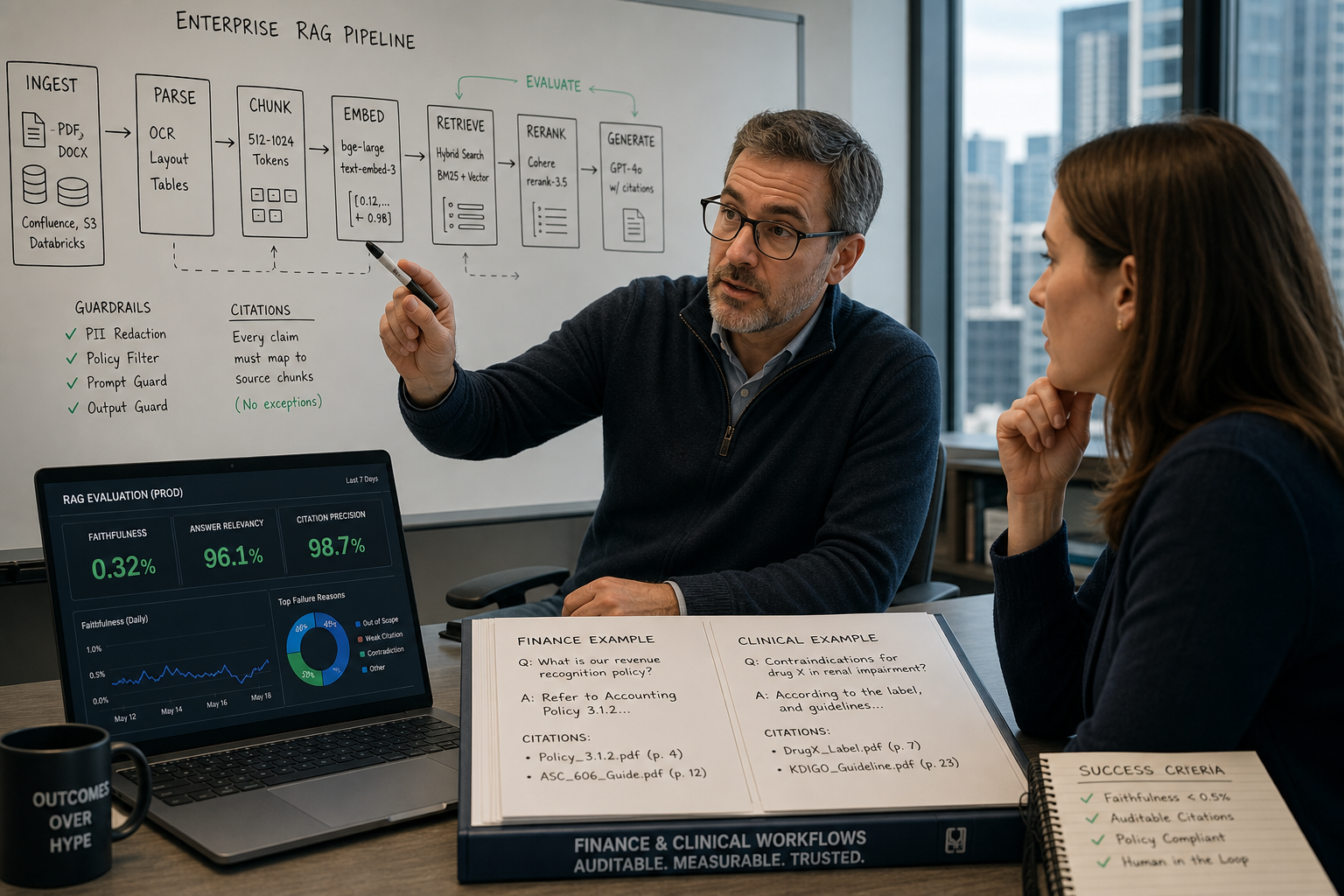
RAG for Regulated Workloads: provenance, vector DBs, and audit trails that survive legal review

A sloppy RAG deployment is an audit time bomb. This playbook gives legal, finance, and healthcare teams a pragmatic engineering design for deterministic citations, vector DB choices (Pinecone, Milvus, Elasticsearch), immutable provenance, and SLOs that stand up under subpoena.

Read More

Which Predictive‑Maintenance Stack Pays Back in 12 Months

Most predictive‑maintenance pilots fail because teams pick the wrong model for the wrong failure mode and never measure avoided downtime. This post is a procurement + engineering scorecard: when to buy Siemens/Uptake, when to run Databricks + MLflow in‑house, and when AWS Lookout/Azure Predictive Services are the practical choice for mid‑market factories.

Read More
AI Credit Underwriting in 2026: What Mid‑Market Lenders Actually Need (and What Vendors Won’t Tell You)

AI Credit Underwriting in 2026: What Mid‑Market Lenders Actually Need (and What Vendors Won’t Tell You)

Buying the wrong AI underwriting product costs months and millions. This CTO brief names the three vendor classes, the common TCO traps, and an 8‑point checklist to get auditable decisions in 8 seconds.

Read More
Airewrite Multi‑Tenant at Scale: Per‑Tenant SLOs, Cost Attribution, and Token Quotas that Don’t Break Billing

Airewrite Multi‑Tenant at Scale: Per‑Tenant SLOs, Cost Attribution, and Token Quotas that Don’t Break Billing

If you bill Airewrite (or any hosted LLM product) per-use, missing per-tenant controls will bleed margin and invite churn. This playbook gives engineering configs for per-tenant SLOs, throttles, cost attribution, soft vs hard token quotas, mirrored canaries, redrive strategies, and instrumentation using GCP/Vertex + Pinecone + Cloud Functions, Datadog, and Snowflake.

Read More

Visual inspection AI that actually ships: dataset size, labeling tradeoffs, and on-line accuracy

Engineering field guide to what dataset sizes actually move the needle for visual inspection AI, where to spend labeling dollars, vendor and hardware tradeoffs, and realistic on-line accuracy ranges.

Read More

Airewrite in Production: Mirrored Canary Evidence, Redrive Playbooks, and Safe Multi‑Model Fallbacks

If Airewrite is in your stack, audit trail, canary evidence, and a redrive plan matter more than single-run model accuracy. This is a narrow engineering playbook for mirrored canaries, automated redrives, and multi-model fallbacks that preserve metric lineage and auditability.

Read More